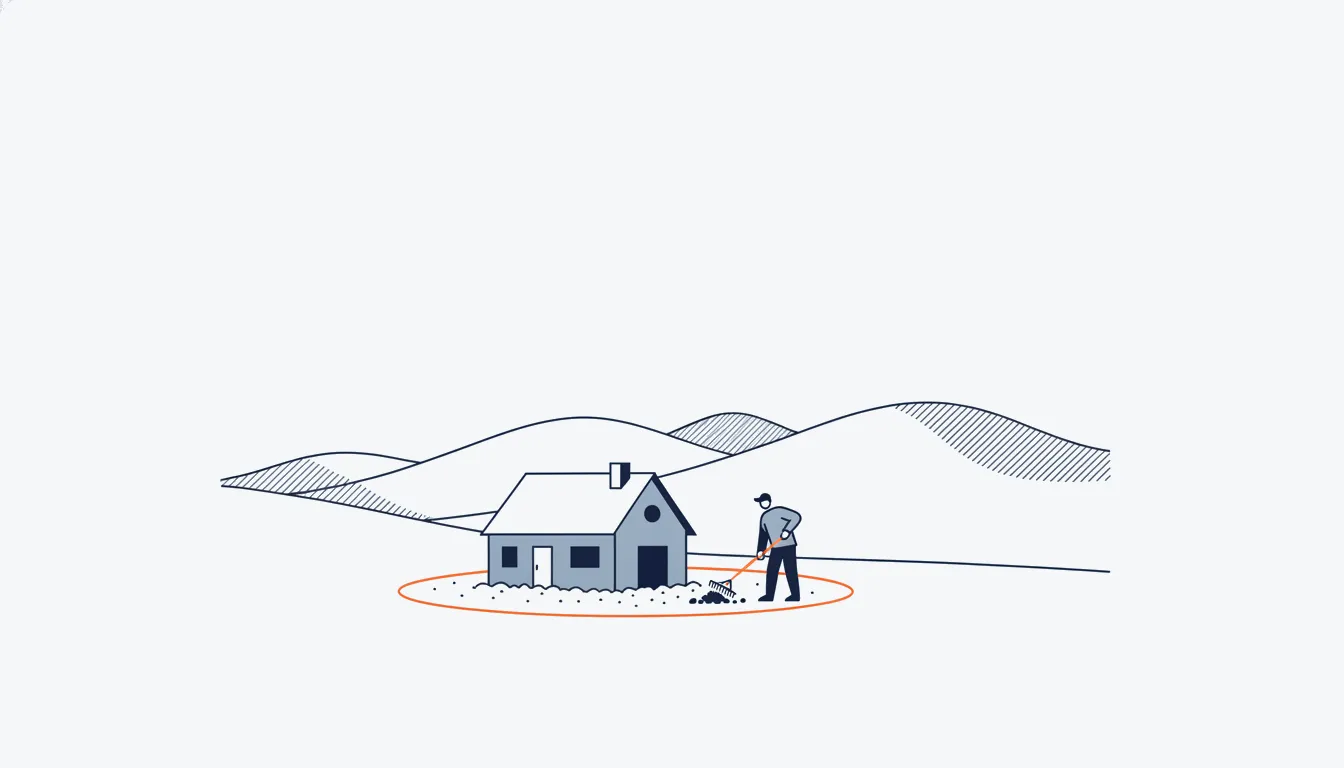
Zone Zero is California’s ember-resistant zone rule: the first 5 feet around a structure must be cleared of combustible material, no flammable vegetation, no combustible mulch, no stored combustibles, no combustible fencing attached to the building. Mandated by AB 3074 and written by the Board of Forestry, the final draft regulation was approved August 19, 2026 and is now under review at the Office of Administrative Law; there is no effective date yet. When it takes effect, it applies to structures in the State Responsibility Area and in Very High Fire Hazard Severity Zones, with new construction complying first and existing homes phased in over a multi-year window. For fencing, hardscape, landscaping, gutter, vent, and exterior envelope contractors, it is a statewide, parcel-mapped retrofit market with a legal clock, and the homeowners are already moving because insurers are not waiting for the effective date.
Regulatory status, date-stamped September 1, 2026: final draft approved by the Board of Forestry on August 19, 2026; OAL review pending; no effective date set. This page is updated when that changes.
Everything else written about Zone 0 is a homeowner explainer. This is the contractor’s version: what gets mandated, in what phase, for which parcels, and which trades do the work at each phase.
The phases, and who does the work
Compliance phases key off the effective date OAL sets, with new construction first and existing structures following. The work itself sorts into four lanes, and most parcels need more than one.
| Phase | Applies to | Deadline pattern | Work required | Trades that do it |
|---|---|---|---|---|
| Phase 1 | New construction in scope | On the effective date | Built-in compliance: noncombustible perimeter, materials, vents | GCs, landscape architects, fencing |
| Phase 2 | Existing structures in scope | Multi-year window after the effective date | Retrofit: clear, replace, harden the first 5 feet | Landscaping, fencing, hardscape, gutter and vent |
| Ongoing | Everything in scope | Continuous | Maintenance to keep the zone compliant | Landscaping and yard-care recurring contracts |
The four retrofit lanes inside Phase 2, which is where the volume is:
- Clearing and mulch replacement. Strip combustible mulch and flammable plantings from the 5-foot strip and replace with gravel, pavers, or bare-soil-plus-stepping surfaces. Landscaping and hardscape work, and the natural entry job on every parcel.
- Fencing and gates. Combustible fencing attached to the structure is out; the fix is replacing the last sections with noncombustible material (metal, masonry) or rebuilding the connection. This is the single clearest new mandate for fencing contractors in the state.
- Vents, gutters, and openings. Ember-resistant vents, gutter guards, and sealing gaps sit adjacent to the Zone 0 strip in every hardening checklist and get quoted in the same visit. Product demand for ember-resistant vents is already substantial and competitive; the install relationship is where a contractor holds margin.
- Decks and outbuildings. Under-deck clearing, deck material questions, and sheds inside the 5-foot line, work that pulls in carpentry and GC trades and frequently escalates into bigger envelope jobs, including roofing.
The map decides who is in scope
Whether a parcel is covered is not a judgment call; it is a map lookup. CAL FIRE’s Fire Hazard Severity Zone maps, updated at parcel level in 2024 and 2025, define the State Responsibility Area tiers and the Very High zones in local areas, and the 2025 updates expanded mapped acreage substantially, pulling whole neighborhoods into scope that were not there before. Two facts make the maps commercially useful:
- They are parcel-level and public. A contractor can resolve any address to in-scope or out in a minute, and a mailing or canvassing route can be drawn entirely inside Very High zones.
- The 2025 expansions are the fresh market. Owners newly mapped into a Very High zone are hearing about it from their insurer first, which is a worse messenger than a contractor with a fix.
Why the work is happening before the mandate
There is no effective date yet, and the demand is real anyway, because the insurance market moved first. Under the Safer from Wildfires framework, California insurers offer premium credits for ember-resistant zones and hardening measures, and in the Very High zones the practical question has become whether hardening is needed to keep coverage at all. A homeowner who just received a non-renewal notice, or a 40 percent premium jump, does not wait for OAL. For contractors this means the current market is insurance-driven and urgent, and the regulatory effective date, when it lands, adds a second, larger wave with a legal deadline behind it: the moment to already be the established Zone 0 contractor in a market is before that date, not after.
The account layer: HOAs, multi-family, commercial
Single-family retrofits are the volume; the accounts are the parcels with portfolios behind them. HOAs in mapped zones face common-area compliance across every structure they govern, and a board that hardens one building needs the same work on all of them. Multi-family owners and managers in Very High zones carry both the compliance exposure and the insurance pressure at portfolio scale. Commercial parcels, especially hospitality and campuses in the wildland interface, buy hardening as risk management with real budgets. One HOA relationship is fifty Zone 0 jobs plus the recurring maintenance contract that keeps the zones compliant year after year, and the account-selling playbook applies to these buyers directly.
The worked numbers
| Item | Typical range | Note |
|---|---|---|
| Single-family Zone 0 retrofit (clear + mulch swap + minor fence section) | $2,000 to $8,000 | Varies with hardscape share and fence length |
| Fence conversion, attached sections to noncombustible | $1,500 to $6,000 | Per structure connection, material-dependent |
| Vent and gutter package | $1,500 to $5,000 | Ember-resistant vents plus guards, whole-house |
| HOA / multi-family, per structure at portfolio scale | $1,500 to $5,000 | Volume pricing; recurring maintenance on top |
| Recurring compliance maintenance | $300 to $900 per visit | The annuity: zones regrow and re-clutter |
Ranges are planning figures for California markets, not quotes; parcel conditions dominate. The structural point is the last row: Zone 0 is not a one-time job, because vegetation grows back and storage creeps back, and the inspection regime re-checks. The contractor who wins the retrofit and attaches the maintenance contract owns the parcel’s compliance relationship for years.
What FieldClients is doing here
The signal layer for this market is public and parcel-level: the FHSZ maps define scope, county defensible-space inspection results mark documented non-compliance where published, and the phased deadlines, once OAL sets the effective date, put a clock on every mapped parcel. The routable B2B subset, HOAs, multi-family, and commercial parcels inside Very High zones, is exactly the kind of dated, documented signal FieldClients routes in other trades, with a verified decision-maker email on every lead, and a company phone where listed, to a capped number of members per trade and market. California exterior seats open as members sign; if you work fencing, hardscape, landscaping, or envelope trades in mapped counties, ask about your market and we will show you what the parcel data looks like there.