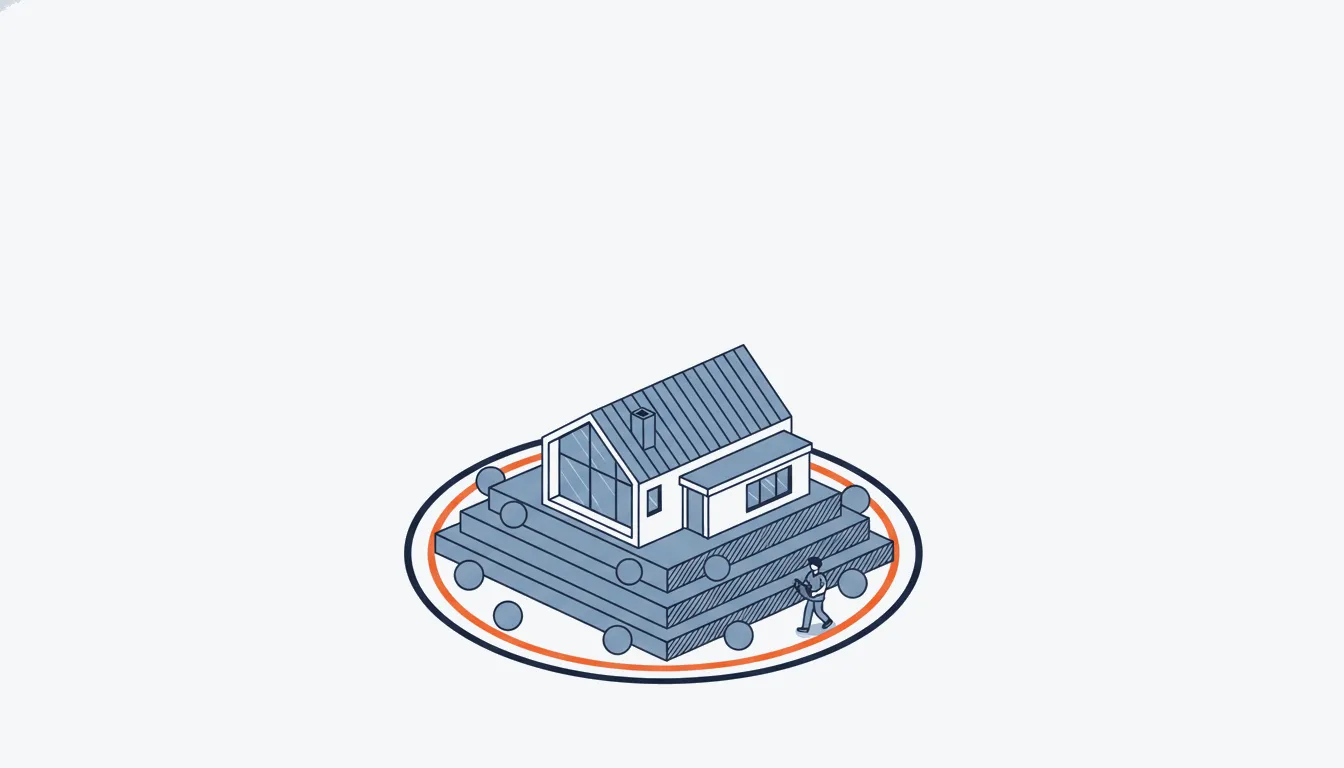
A defensible space inspection checks whether the vegetation and combustibles around a structure meet California’s clearance requirements: Zone 1 (0 to 30 feet) and Zone 2 (30 to 100 feet) today, with the stricter Zone 0 ember-resistant rule for the first 5 feet phasing in once its effective date lands. CAL FIRE inspects in the State Responsibility Area, local fire departments inspect under their own ordinances, and insurers increasingly run their own versions. A fail produces a written notice, a correction list, and a re-inspection date, which is to say: a documented, dated statement that a specific parcel needs work that landscaping, fencing, tree, and hardening contractors sell.
What the inspector walks
| Zone | Distance | What must be true |
|---|---|---|
| Zone 0 (pending) | 0 to 5 ft | Ember-resistant: no combustible mulch, vegetation, stored items, or attached combustible fencing |
| Zone 1 | 0 to 30 ft | Lean and green: dead material removed, spacing between shrubs and trees, limbs clear of roof and chimney |
| Zone 2 | 30 to 100 ft | Reduced fuel: grass mowed, ladder fuels broken up, spacing by slope |
The inspector’s list maps one-to-one onto trades: clearing and spacing is landscaping and tree work, the roof and gutter items are exterior maintenance, the Zone 0 items are hardscape and fencing conversions once the rule is live. A single fail commonly cites items across three trades, which is why the contractor who can quote the whole list, or bring the partners who can, wins the parcel.
The enforcement path, and the parallel insurance path
The official path is graduated: notice, re-inspection (typically 30 to 60 days), then citations and fines for holdouts, and in some jurisdictions abatement, where the agency clears the parcel and bills the owner. Most owners comply at the notice stage, which makes the window between notice and re-inspection the moment the work gets bought.
The parallel path has no citations and more force: insurers inspect, and their consequence is non-renewal or a premium that doubles. An owner holding a carrier’s condition letter behaves like an owner holding a fail notice, on a tighter clock. Both letters send the owner looking for the same contractors at the same moment.
Where the results are published, and what they are worth
Publication is uneven, and that unevenness is the opportunity. CAL FIRE publishes program-level inspection data; some counties and fire districts publish parcel-level compliance or release it on request; local programs vary from open dashboards to nothing. Where parcel-level results exist, a failed inspection is as good as a signal gets: a specific parcel, a dated document, a named list of conditions, and a re-inspection deadline that functions as a decision date. Layer the Fire Hazard Severity Zone maps on top, parcel-level and public statewide, and even in jurisdictions that publish nothing you can still see exactly which parcels carry the compliance exposure.
The account version, as with everything in this cluster, is HOAs, multi-family, and commercial parcels in the mapped zones: common areas that fail inspections at portfolio scale and boards that buy recurring compliance maintenance rather than one-time clears.
The contractor’s play
- Know the inspection cadence in your counties: who inspects, when the seasonal sweeps run, and what the notice-to-reinspection window is. Your outreach calendar is their inspection calendar.
- Quote the list, not a service. The fail notice is an itemized scope. Bid it item by item, with the re-inspection date as the deadline, and passing re-inspection as the deliverable.
- Sell the maintenance annuity. Vegetation regrows; every cleared parcel is out of compliance again in a season or two. Annual maintenance agreements are the durable business, and boards prefer them to emergency clears.
- Watch the maps and the results where published. New Very High zone designations and fresh fail records are the dated reasons to call.
This is the signal architecture FieldClients builds in other trades, applied to the wildfire-compliance lanes: documented, dated events matched to the parcel and the account behind it, with a verified decision-maker email on every lead, and a company phone where listed, routed to a capped number of members per trade and market. California exterior seats open as members sign; ask about your market and we will show you what the parcel data looks like there.