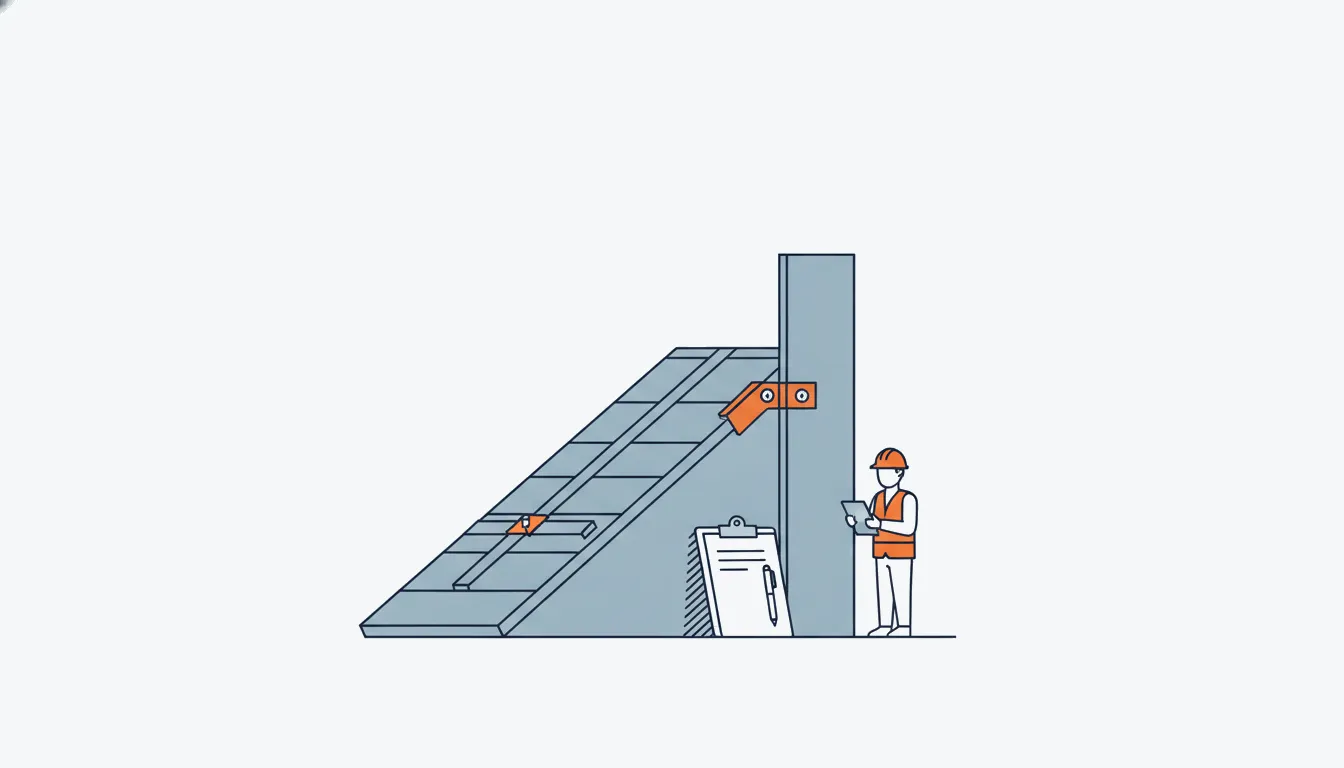
A wind mitigation inspection documents a home’s wind-resistance features on Florida’s standard verification form so the insurer can apply premium credits. It checks seven categories: roof covering, roof deck attachment, roof-to-wall connection, roof geometry, secondary water resistance, opening protection, and the code generation the home was built under. The inspection costs $75 to $150, the form is valid for five years, and the credits it earns commonly cut hundreds of dollars a year from the wind portion of a premium, which in Florida is most of the premium. It is voluntary, it cannot hurt (missing features simply earn no credit), and skipping it is donating money to the carrier.
This guide is the short operator’s version for contractors and inspectors: what each credit is, why a re-roof resets the form, and what a wind mitigation filing tells anyone watching a market.
The seven categories, and what each is worth
| Category | What the inspector documents | Who controls it |
|---|---|---|
| Roof covering | Covering type and its permit date against current code | The roofer, at replacement |
| Roof deck attachment | Nail size, spacing, deck thickness | Reset at re-roof, re-nailed to current code |
| Roof-to-wall connection | Toe nails vs clips vs single or double straps | Structural; retrofittable, biggest single credit on older homes |
| Roof geometry | Hip vs gable shape | Fixed by the house, hip earns the credit |
| Secondary water resistance | Sealed deck or peel-and-stick underlayment | Cheap to add during a re-roof, wasted money after |
| Opening protection | Impact-rated windows, doors, shutters, garage door | Window and door trades |
| Code generation | Permit era of the structure | Fixed; post-2001 homes start ahead |
Read the right-hand column as a contractor and the pattern is obvious: most of the form is decided on the day the roof is replaced. Deck re-nailing, secondary water resistance, covering compliance, all are either automatic or nearly free during a re-roof and expensive or impossible afterward. That is the honest pitch to a re-roof customer: the roof you are already buying can be documented into years of premium savings, but only if the form gets redone when the work finishes.
Why the re-roof resets everything
A wind mitigation form describes the roof that existed on inspection day. Replace the roof and the form is describing a building that no longer exists, in the insurer’s favor: the customer keeps paying premiums priced on the old deck nailing and the old covering. The complete close of a roofing job in Florida therefore includes the new inspection: the re-roof resets the physical answers, the new form banks them, and the customer sees the premium drop land within a renewal cycle. Roofing companies that build the inspection into the contract price close the loop themselves; the rest leave the visible payoff of their own work undocumented.
The signal: what a wind mitigation filing tells the market
For anyone watching permit and inspection activity, wind mitigation events read precisely:
- A wind mitigation inspection following a re-roof permit marks a completed replacement with the paperwork finished, a competitor already holds that relationship.
- The neighbors are the lead. Florida subdivisions were built in tight year-bands, so a street producing re-roof permits and fresh mitigation forms is a street where every similar roof is approaching the same 15-year insurance threshold. The property that already moved marks the block that is about to.
- Age with no filings is the earlier signal: a home past the threshold with no re-roof permit and no mitigation form on record is where the next inspection letter, and the next replacement, is heading. That is computable from permit history alone.
FieldClients runs that computation at market scale for roofing members: permit-age thresholds, re-roof and mitigation activity, and the untouched properties around it, matched to the owner or management account behind each address, with a verified decision-maker email on every lead, and a company phone where listed. Seats are capped per trade and market. The form is worth $150 to the homeowner; the pattern behind ten thousand forms is worth a market.