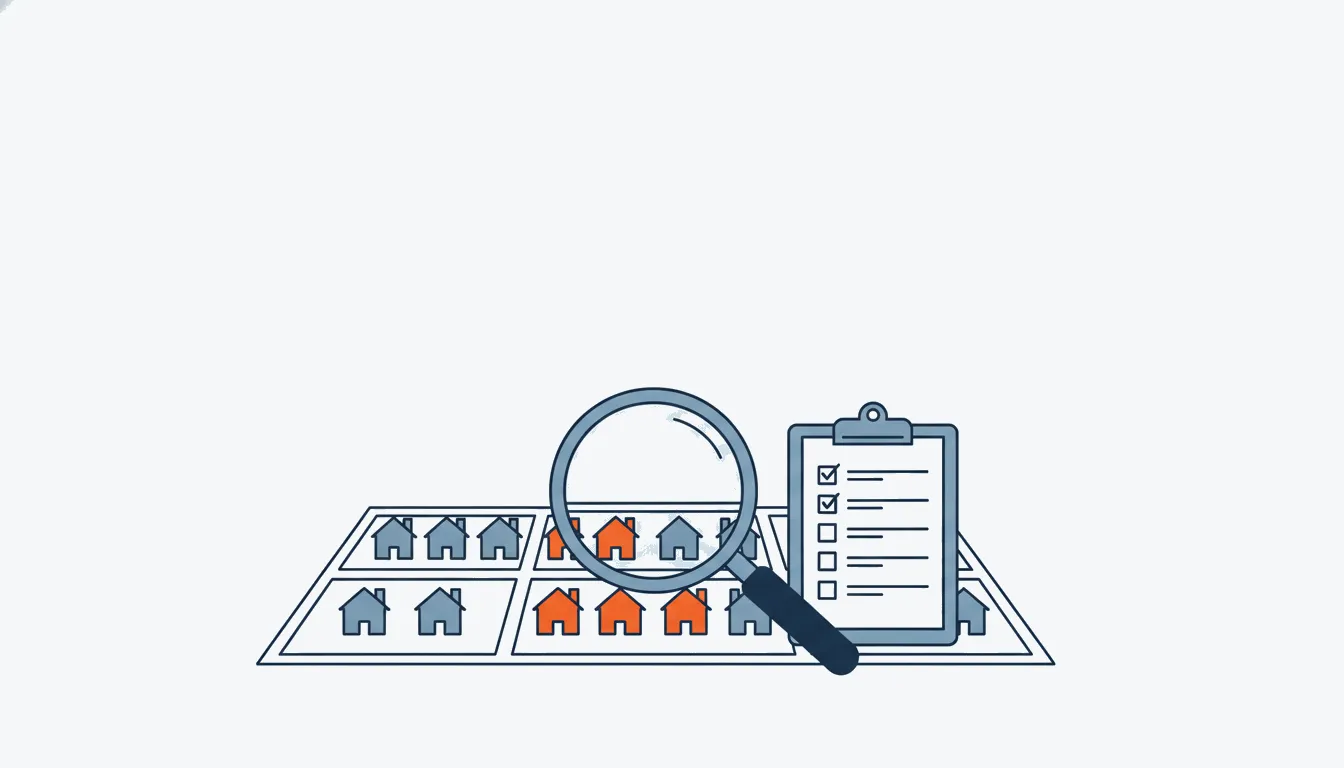
A lead service line inventory is the address-level list every affected US water system must publish, classifying the service line at each address as lead, galvanized requiring replacement (GRR), non-lead, or unknown. Baseline inventories were due in October 2024 and update continuously as lines are verified and replaced. For a plumbing or utility contractor, the inventory is something rare: a public document that names, address by address, exactly where a decade of mandated replacement work will happen. This guide covers how to read one, where they are published, why the unknowns matter more than the confirmed lead lines, and which addresses on the list are worth calling first.
The four categories, read as a contractor
| Category | What it means | What it is worth |
|---|---|---|
| Lead | Confirmed lead line | Mandated replacement inside the 10-year window; owner gets a letter every November |
| Galvanized requiring replacement (GRR) | Galvanized steel that is or was downstream of lead | Treated like lead: mandated replacement, same letters |
| Unknown | No record proving material | Must be investigated and classified; treated as potentially lead until resolved |
| Non-lead | Verified copper or plastic | No work; useful as the denominator when sizing a market |
Two reading rules matter. First, lead plus GRR is the mandate: both categories sit inside the LCRI’s replacement requirement, so size a territory on the sum, not on “lead” alone. Second, the unknown list is usually the bigger list, and it converts in two ways: identification work now (records checks, potholing, point-of-entry verification, all billable), and a stream of newly confirmed lead lines later, each one a replacement that was not on anyone’s radar last quarter.
Where inventories are published
There is no single national portal, which is exactly why watching them is worth something. In practice inventories live in three tiers:
- Utility sites. Large systems publish searchable maps or address lookups. Chicago, the largest lead-line count in the country at roughly 400,000, runs an address lookup and map through its water department; Dallas publishes an interactive inventory map. Quality varies from clean GIS layers to a PDF table.
- State portals. Many state drinking water programs host every system’s inventory centrally, which is the efficient path when a market spans suburbs served by a dozen small systems.
- The water quality report. Every system’s annual consumer confidence report must say where its inventory is available. When a small utility’s inventory is not online, this is the pointer to request it, and inventories are public records.
A walkthrough: reading a big-city inventory
Take Chicago’s as the template, since it is the biggest and the pattern repeats everywhere. The lookup returns, for an address, the service line material on each side (the utility’s portion and the private portion) and the basis for the classification: historical records, visual verification, or unverified. Reading it:
- Search a block, not an address. The map view shows classification clustering: lead lines were installed by era, so whole blocks share a status. A block of confirmed lead is a canvassing route; a block of unknowns built before 1950 is one verification contract away from becoming one.
- Check both sides of the line. Where the public side was already replaced but the private side reads lead or unknown, the utility’s crew has come and gone, and the private side is now the owner’s open item. Those are the most motivated retail prospects on the list.
- Note the basis. “Historical records” classifications flip during verification more often than visually verified ones. A territory heavy on records-based lead is softer than it looks; heavy on verified lead, harder and more urgent.
- Cross-reference building type. The inventory gives addresses, not building types. Pairing it with the property record or permit history separates the single-family homes from the buildings that are accounts.
Which addresses to call first
Ranked by value per hour of outreach:
- Multi-family and commercial addresses classified lead or GRR. Bigger service lines, compliance-sensitive owners, and a management company or portfolio behind the address. One relationship, many buildings. This is the routable B2B subset.
- Schools and childcare facilities. Testing and remediation pressure sits on top of the line classification, and the buyer is an institution with a budget process, so lead times are long but the work is real.
- Private-side-remaining addresses. Public side done, private side open, owner already contacted by the utility. Shortest path from call to contract.
- Blocks of unknowns in pre-1950 housing. Not for retail calls, but for proposing identification work to the utility, or for being positioned when the classifications land.
Homeowner addresses convert too, but one at a time, and mostly in November when the letters arrive. The letter-wave guide covers catching that seasonal demand; the accounts above are what compound the rest of the year.
The inventory is a snapshot; the market is a feed
An inventory is updated continuously: unknowns resolve, replacements post, program pages change, procurement opens. Reading it once produces a list that decays. Watching it produces a feed of state changes, and the state changes are the leads: an address newly confirmed lead, a block scheduled for public-side work, a verification contract posted.
That watching layer is what FieldClients runs for plumbing members: we monitor the inventories and utility procurement in a member’s market, pull the multi-family, commercial, and institutional addresses worth calling, match each to the owner or management company behind it, and route the lead with a verified decision-maker email on every lead, and a company phone where listed. Seats are capped per trade and market. If the plumbing seat in your market is open, the inventory work in this guide arrives done, daily.